Love is the most written-about subject in human history — and the most difficult to describe precisely. The vocabulary for love ranges from the casual to the profound, from the romantic to the parental, from the new and fragile to the old and unshakeable. This guide gives you 82 adjectives to describe love, organized by type, intensity, quality, and stage of relationship, with definitions and example sentences that go beyond the generic to capture love in all its specific and various forms.
Words for the Character of Love
- Unconditional — not dependent on the other person meeting conditions; given freely regardless of behavior or circumstance. “Unconditional love — the kind that does not require the other person to deserve it.”
- Selfless — consistently places the other's well-being above one's own needs. “Selfless love that showed itself in decades of small, unrecorded sacrifices.”
- Devoted — deeply committed; constant and single-minded in attachment. “A devoted love that had not diminished in thirty-seven years of marriage.”
- Steadfast — unwavering; holds constant through all difficulty. “Steadfast love in the face of everything that might reasonably have ended it.”
- Enduring — lasts through time without diminishing. “An enduring love that the passing of years had deepened rather than worn thin.”
- Passionate — intense and fervent; emotionally and physically urgent. “A passionate love that consumed both of them for two years and left them changed.”
- Tender — gentle and caring; expressed through small attentions. “A tender love expressed in the making of tea without being asked.”
- Fierce — protective and intense; would defend what it loves without hesitation. “Fierce maternal love that would have moved mountains and barely noticed.”
- Quiet — expressed through presence and action rather than words or drama. “A quiet love — the kind that fills the space without making a sound.”
- Deep — has real substance and emotional foundation; not surface-level. “A deep love built on genuine knowledge of who the other person was.”
Words for New and Growing Love
- Intoxicating — overwhelming and disorienting; produces a state resembling drunkenness. “An intoxicating early love that made rational thought feel like a luxury.”
- Heady — exciting and somewhat overwhelming; early-stage romantic feeling. “The heady first months before the relationship became real.”
- Budding — at the earliest stage; just beginning to develop. “A budding love that neither of them had named yet.”
- Tentative — careful and uncertain; feeling its way forward. “Tentative in the specific way of people who had been hurt before.”
- Electric — charged with energy and excitement; every interaction heightened. “Electric chemistry that made ordinary conversations feel significant.”
- Giddy — happy and slightly dizzy; the specific joy of new love. “Giddy in a way that embarrassed her and that she would not have changed.”
- Exhilarating — produces intense excitement and happiness. “Exhilarating in the way of anything new and uncertain and good.”
- Consuming — takes up all available mental and emotional space. “A consuming infatuation that made everything else feel thin.”
Words for Mature and Lasting Love
- Comfortable — at ease; no performance required, no distance maintained. “A comfortable love — the highest achievement of any relationship.”
- Companionable — characterized by pleasant, easy companionship. “A companionable love built on thirty years of shared mornings.”
- Resilient — has survived difficulty and emerged intact or stronger. “A resilient love that had been tested twice and come through both times.”
- Grounded — stable and real; not dependent on idealization. “A grounded love that had survived the discovery of who the other person actually was.”
- Seasoned — deepened and enriched by time and shared experience. “A seasoned love that required no declarations — it was simply present.”
- Abiding — lasting; remains constant over long periods. “An abiding love that outlasted every change of circumstance.”
- Profound — has real depth; touches the deepest parts of who we are. “A profound love that changed what she understood about herself.”
Words for Specific Types of Love
- Maternal / Paternal — the specific love of parent for child; protective and profound. “Maternal love of a depth that surprised her — she had not known she contained that much.”
- Fraternal — brotherly or sisterly love; the love of close kinship. “Fraternal loyalty that had never been tested because it had never been necessary.”
- Platonic — deep love without romantic or sexual element. “A platonic love that both of them understood was the most important relationship of their lives.”
- Romantic — characterized by idealization, longing, and emotional intensity. “Romantic in the old sense — full of meaning and distance and yearning.”
- Unrequited — not returned; one-sided. “Unrequited love — the only truly pure form, some argued, because it expected nothing.”
- Reciprocal — flows equally in both directions; genuinely mutual. “Reciprocal in a way that made each of them feel simultaneously lucky.”
Frequently Asked Questions
What are the best adjectives to describe love?
The most meaningful love adjectives are specific rather than general. ‘Unconditional’ describes a love without conditions. ‘Steadfast’ describes a love that holds through difficulty. ‘Tender’ describes how love is expressed. ‘Fierce’ describes how love protects. Each adjective reveals a different dimension — the best love descriptions use two or three together to capture something specific and true.
What are literary words for love?
‘Ardent’ (burning with passion), ‘devoted’ (completely committed), ‘abiding’ (lasting without change), ‘magnanimous’ (generous and forgiving in love), ‘ineffable’ (too great to be expressed in words), and ‘rapturous’ (filled with intense joy) are elevated literary options. The ancient Greek words for love — ‘eros’ (romantic), ‘philia’ (friendship), ‘storge’ (familial), and ‘agape’ (unconditional) — remain the most precise conceptual framework for describing love’s different forms.
What words describe true love?
‘True love’ is best described by its qualities over time: steadfast (holds constant), selfless (puts the other first), honest (tells the truth even when difficult), resilient (survives difficulty), abiding (remains without requiring renewal), and grounded (based on real knowledge of who the other person is, not idealization). The difference between true love and infatuation is that true love improves its knowledge of the other person and continues anyway.
What are words for love in other languages that English lacks?
‘Saudade’ (Portuguese — a melancholic longing for an absent beloved), ‘Mamihlapinatapai’ (Tierra del Fuego — a look shared between two people who both want something but neither will initiate), ‘Ya’aburnee’ (Arabic — ‘may you bury me,’ expressing a love so deep you cannot imagine outliving them), and ‘Forelsket’ (Norwegian — the euphoric feeling of falling in love) are untranslatable words that describe aspects of love for which English has no single term.
How do authors write about love?
The best literary love is written through behavior rather than declaration: what a person does rather than what they say. Chekhov’s characters show love by remembering small details; Tolstoy shows it through sacrifice; Austen through the ability to finally see and accept someone as they actually are. The most powerful fictional love is specific, flawed, and earned — not described as ‘unconditional’ but shown to be so through what the character actually does.
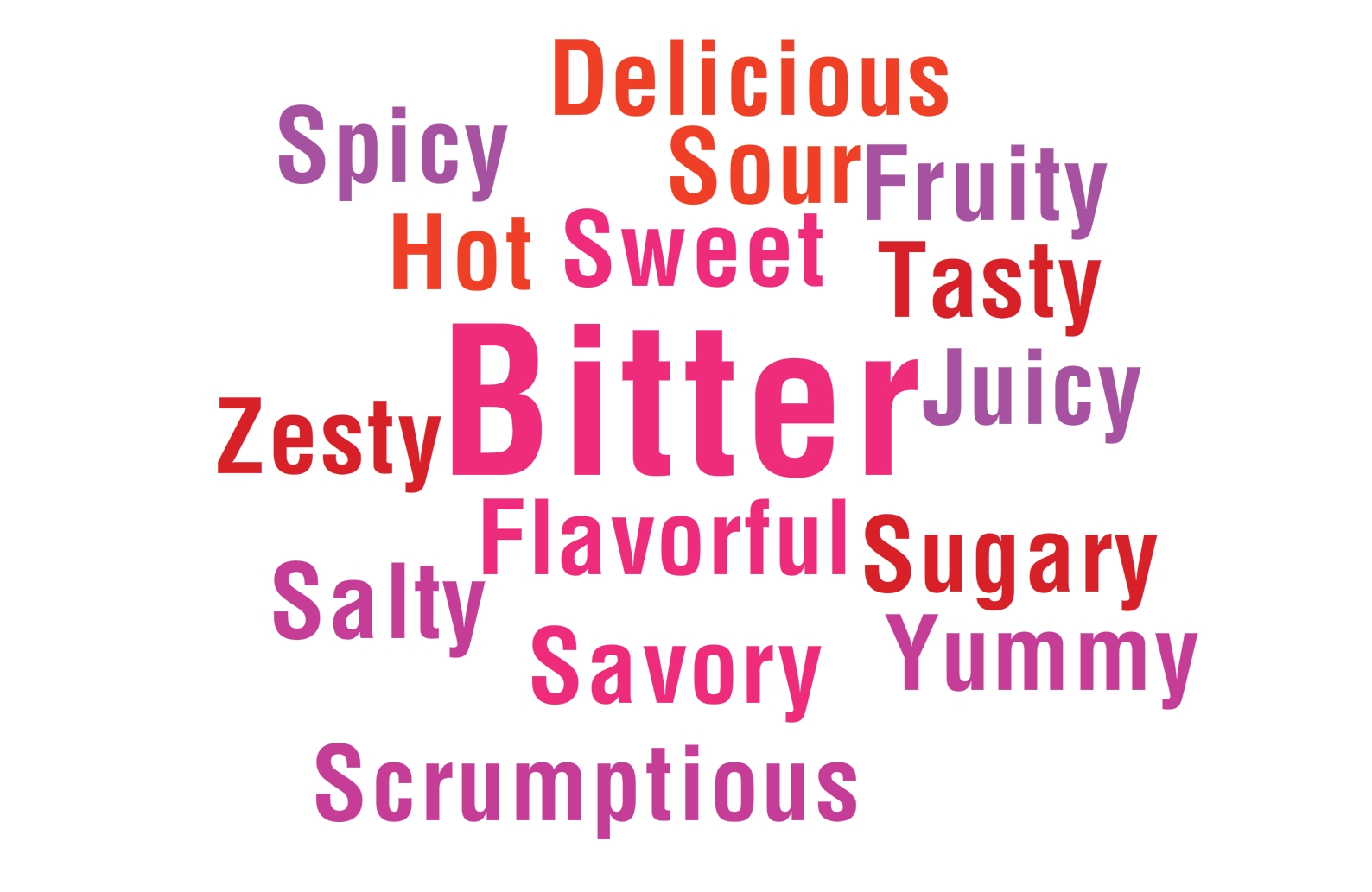
What are some descriptive words for Taste ?
Here is a list of words that are related to the word Taste.
Total number of Taste words and adjectives: 16 words
Taste words are listed in alphabetical order.
Delicious
Flavorful
Fruity
Hot
Juicy
Salty
Savory
Scrumptious
Sour
Spicy
Sugary
Sweet
Tasty
Yummy
Zesty
These descriptive words for kids to use in writing are suitable for grades:
Grade 2, Grade 3, grade 4, Grade 5, Grade 6 and Grade 7
Words for teachers and school students.
Download Taste related Words in PDF: Descriptive Words for Taste PDF
Download Image with Taste related Words.